

Servo Transfer Unit
Advanced Metal Stamping Automation for Complex, Multi-Stage Production
- Capabilities
- Servo Transfer Unit
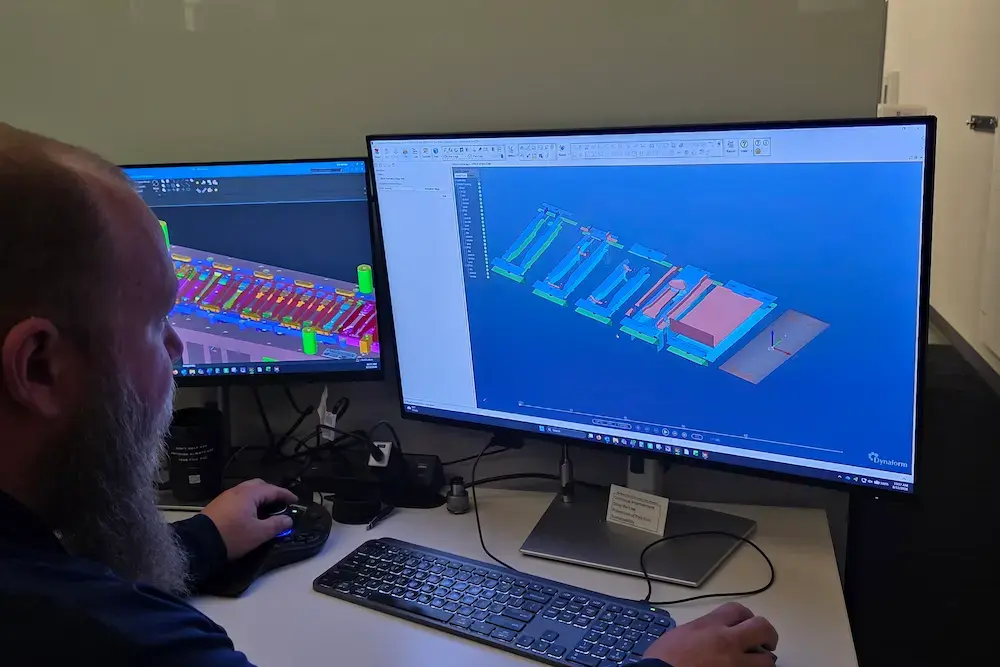
ATD has integrated a servo transfer unit into its 700-ton Aida servo press, enabling parts to move freely through multi-stage stamping operations without carriers or manual handling between steps.
The result: fewer secondary operations, reduced scrap, tighter process control and greater production flexibility for precision metal stamping manufacturing programs with complex geometries and high-volume demands.
What the Transfer Unit Does
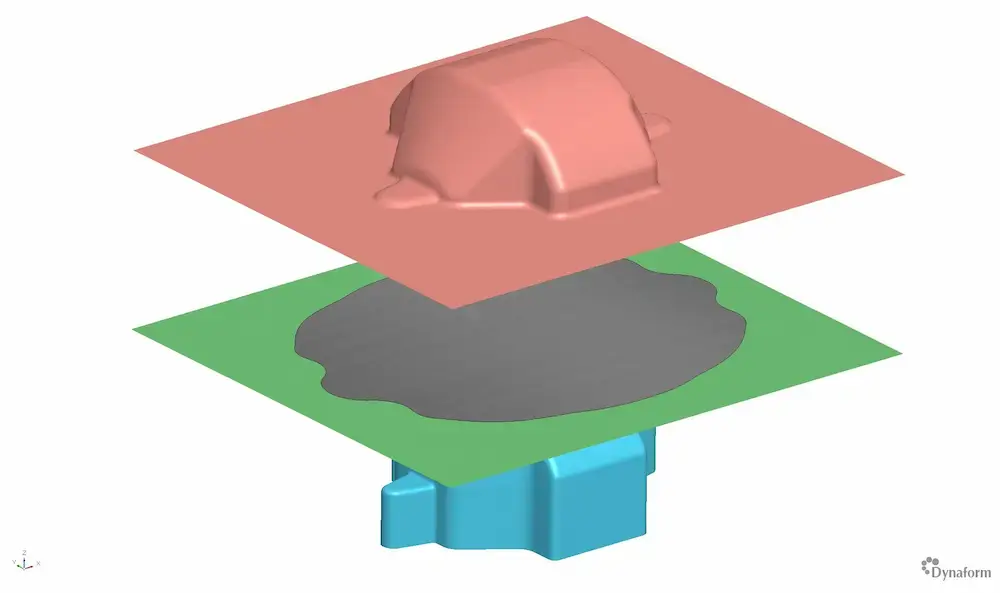
In a conventional progressive die setup, parts move through the press attached to material carriers. This constrains part design, increases material usage and often requires secondary operations to complete the part.
ATD’s servo transfer system moves parts independently from station to station, freeing them from carrier constraints and enabling complex forming operations in a single, continuous metal stamping manufacturing process.
Independent Part Movement
Parts transfer station-to-station without carriers, eliminating design constraints and reducing scrap from carrier material.
In-Press Repositioning
Components can be rotated and reoriented mid-process, enabling complex geometries to be completed within a single press run.
Fewer Secondary Operations
Forming steps that previously required offline handling can now be completed within the press cycle, reducing labor and lead time.
Consistent Part Flow
Servo-controlled movement reduces variability between operations, supporting tighter tolerances and repeatable quality across high-volume programs.
Production Advantages
The servo transfer unit delivers measurable improvements across the metal stamping automation process from material efficiency and process reliability to reduced labor and faster cycle times.
-
Less Material Waste on Your Program: Freeing parts from carrier constraints eliminates material tied up in carrier design and reduces overall blank waste.
-
Tighter Tolerances, Run After Run: Removing carrier thickness as a variable improves dimensional consistency across high-volume runs.
-
More Uptime, More Predictable Delivery: More reliable part flow between stations means fewer interruptions and more predictable cycle times.
-
Lower Cost Per Part: Automated part handling reduces manual intervention, allowing team members to focus on higher-value work.
"It allows for more consistent quality, faster turnaround and cost efficiencies. It also reduces risk for our customers."

Bill Bennett
President, ATD
Ideal for Complex, Multi-Stage Stamped Components
If you've been told a part is too complex, requires too many hits or needs secondary operations off the press, that's exactly the work this equipment was added to handle.
The transfer unit is particularly well-suited for programs where part geometry, tight tolerances or production volume make conventional progressive die methods less efficient.
Automotive
-
Brackets and structural reinforcements
-
Safety system components
-
Door hardware and latch mechanisms
-
Interior and under-hood mounting components
Industrial
-
HVAC and plumbing hardware
-
Infrastructure brackets and fasteners
-
Complex multi-form industrial components
Built to Support Your Most Demanding Needs
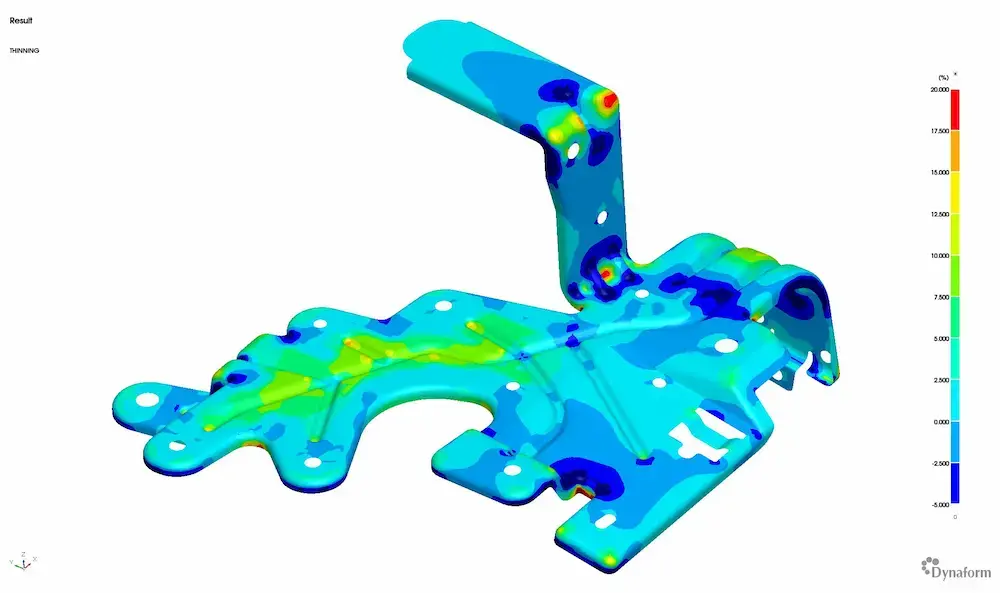
Before the first production part ever ran through the servo transfer unit, ATD spent nearly a year making sure the investment was ready to perform, evaluating equipment options, selecting partners focused on long-term support and training operators and maintenance teams from the ground up.
Throughout the entire process, every active customer program continued running without disruption. That level of preparation reflects how ATD approaches manufacturing: invest carefully, plan thoroughly and build processes that support complex, high-volume production with confidence.
It’s the kind of commitment manufacturers depend on when quality, timing and consistency matter most.
Ready to Discuss Your Program Requirements?
ATD’s servo transfer capability opens new options for metal stamping manufacturers dealing with complex geometries, high-volume demands or the need to consolidate operations.
Tell us about your part. We'll tell you what the transfer unit can do with it.